
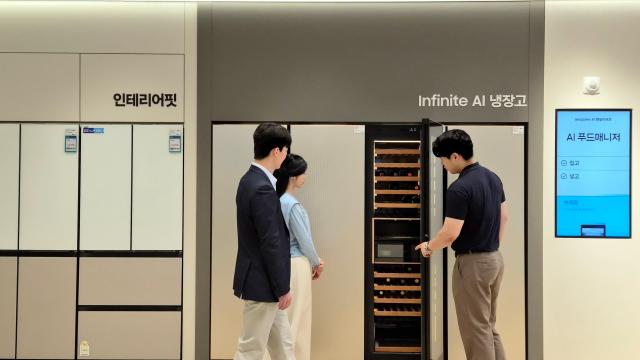
SEOUL, November 25 (AJP) -Consumers around the world are cutting back on discretionary spending, leaving TV and home appliance makers squeezed between weak demand and rising costs.
Samsung Electronics’ ballooning chip profits have masked widening losses in its TV and home appliance businesses. Its European and Japanese rivals have been less fortunate, turning to job cuts and factory closures to survive the chill.
Samsung’s combined television and home appliance operating losses widened to 200 billion won ($149 million) in the third quarter from 10 billion won in the previous quarter, while revenue fell to 13.9 trillion won from 14.5 trillion won.
AI-based investment platform Epic AI projects the businesses will post a combined annual operating loss of 465.1 billion won, more than double last year’s 200 billion won loss.
The strain is already reaching the workforce. Samsung has reportedly held voluntary retirement consultations in its television and home appliance divisions, while LG Electronics carried out a voluntary retirement program for production workers at its Changwon appliance plant in September.
Overseas rivals are making deeper cuts. Swedish appliance maker Electrolux has finalized plans to eliminate 918 jobs in Italy, while Germany’s BSH, a Bosch subsidiary, plans to phase out production at two factories, affecting about 1,400 workers. Japan’s Panasonic reduced its workforce by 12,000 in the fiscal year ended March as part of a broader restructuring program.
Behind the retrenchment is a difficult combination of rising interest rates, weaker housing and stock market, subdued replacement demand and rising production costs - mainly memory prices.
Consumers are putting off purchases just as manufacturers face pressure to charge more.
In South Korea, the composite consumer sentiment index fell 2.3 points to 103.1 in November, its lowest level in seven months, according to data released by the Bank of Korea on Tuesday.
Although the index for overall spending expectations stood at 108, readings for travel, dining out and culture and recreation were below 100 at 94, 95 and 92, respectively, pointing to greater caution over discretionary spending.
“The home appliance market has been struggling, so companies are being increasingly cautious about holding events and other activities,” an industry official told AJP.
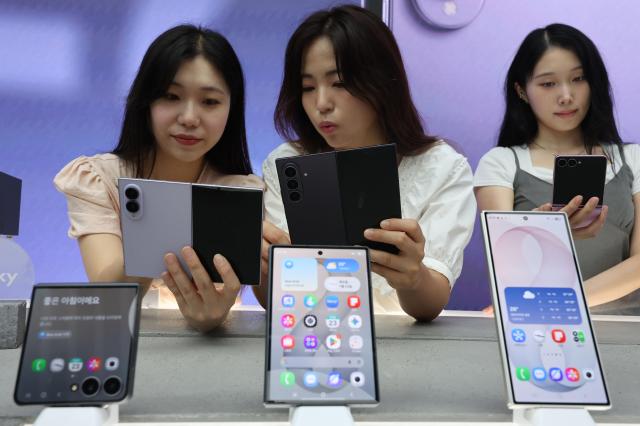
The pressure extends to smartphones, where rising memory costs and higher retail prices are weighing on demand. Worldwide shipments plunged 20 percent from a year earlier in the third quarter, marking the weakest third-quarter performance since 2012, according to preliminary estimates from Counterpoint Research.
Samsung retained its global lead with a 23 percent market share, followed by Apple at 22 percent and Xiaomi at 12 percent. Its shipments nevertheless declined 3 percent from a year earlier.
For Samsung, the divergence cuts across its own businesses: the memory chips swelling profits in one division are adding to costs in another. Its semiconductor earnings provide cover for the consumer electronics slump, but little relief for the factories and workers caught in it.

Candice Kim is a dedicated business and technology reporter specializing in the intersection of high-tech innovation and fast-paced consumer trends. Her core beats span the semiconductor, IT, cosmetics, and retail sectors, where she provides in-depth coverage of industry titans including Samsung Electronics, SK hynix, and LG Electronics, alongside leading consumer brands like Olive Young and Musinsa. Whether analyzing complex silicon supply chains or tracking the latest shifts in beauty and fashion retail, Candice is committed to delivering sharp, accurate reporting that keeps readers informed on the forces shaping today's most dynamic markets.
Copyright ⓒ Aju Press All rights reserved.
Related News
-
 Ministry of Trade to Invest 17 Billion Won in AI Home Appliances by 2031
The government will invest 17 billion won (KRW) to support the development of artificial intelligence (AI) home appliances for small and medium-sized enterprises. The plan includes support from product development to mass production to apply AI technology to actual home appliances, as well as the establishment of 15 types of public learning data by 2031.On November 24, the Ministry of Trade held the opening ceremony of the 'Home Appliance AX Productization Support Center' at the Seoul Electronic Manufacturing Support Center and announced the 'AI Home Appliance Learning Data Construction Roadmap.' This event was organized to expand the product development foundation for small and medium-sized enterprises, focusing on the AI home appliance division of the 'M.AX Alliance,' which promotes the AI transformation of the manufacturing industry.Since launching the M.AX Alliance in September last year, the Ministry has been expanding its support scope not only for the efficiency of manufacturing processes but also for the development of innovative products equipped with AI. The implementation plan announced in August also highlighted the development and demonstration of on-device AI semiconductors for home appliances, robots, and automobiles as key tasks.The Home Appliance AX Productization Support Center is an upgraded facility of the Electronic Manufacturing Support Center operated by the Korea Electronics and Telecommunications Industry Association (KEA) since 2021. The government plans to invest a total of 170 billion won (KRW) over five years from 2026 to 2030, including 10 billion won (KRW) in national funds.The center will be equipped with AI board manufacturing facilities and performance testing equipment. Dedicated engineers will support the entire process from product design to prototype production, demonstration, and initial mass production. In particular, the plan aims to minimize design changes to existing home appliances while incorporating AI functions, thereby reducing the development time and cost burden for small and medium-sized enterprises. The use of domestic AI semiconductors will also be linked to stimulate demand in related industries.The construction of public learning data necessary for AI home appliance development will also be accelerated. The Ministry has selected 15 core data types that can be commonly used across various products through surveys of corporate demand. From 2027 to 2031, three types of data will be constructed each year, and starting in 2028, they will be shared with companies through a dedicated platform. This is to reduce costs associated with individual companies collecting similar data redundantly.During the event, products and technologies from five companies, including an AI automatic cooking robot, a non-contact biometric measurement AI baby crib, AI headphones, a smart ear thermometer, and domestic on-device AI semiconductors, were also introduced.Lee Min-woo, head of the Industrial Growth Office at the Ministry, stated, "To maintain the competitiveness of the home appliance industry, both the AX of manufacturing processes and product innovation must be achieved together. We will spare no support centered on the home appliance M.AX Alliance to ensure our companies can timely introduce innovative AI home appliances with creative ideas."* This article has been translated by AI.
-
Growing Threat of AI Appliance Hacking Prompts Samsung and LG to Strengthen Security Systems
The threat of hacking AI appliances is becoming a reality, yet only 10 appliances have received Internet of Things (IoT) security certification in Korea over the past five years. With low utilization of domestic certifications, major home appliance companies like Samsung and LG are focusing on securing international certifications and strengthening their own security verification systems.According to the National Assembly's Legislative Research Service on the 23rd, out of 450 IoT security certifications issued in Korea from 2021 to 2025, only 10 were in the appliance sector, accounting for a mere 2.2% of the total. Currently, Samsung Electronics holds two valid certifications, while LG Electronics has none registered. Despite the rapid expansion of AI appliances and their connectivity features, the utilization of domestic security certifications remains limited.As the connectivity of AI appliances increases, security threats are growing day by day. Earlier this month, a remote control system for supermarket refrigeration and freezing equipment in Europe was hacked, causing abnormal temperature rises. In Korea, vulnerabilities that could lead to privacy breaches, such as unauthorized access to camera images, were discovered in some robotic vacuum cleaners last year.In response to this situation, Samsung Electronics is enhancing appliance security based on its own security platform, 'Samsung Knox.' The company has obtained the highest level of IoT security certification, 'Standard,' from the Korea Internet & Security Agency (KISA) for products like robotic vacuum cleaners and refrigerators, and has also secured a security label from the German Federal Office for Information Security (BSI). Additionally, Samsung is expanding its global certification efforts by utilizing the mutual recognition system for security certifications between Korea and Germany.Samsung is applying the 'Knox Matrix,' which allows connected devices to check each other's security status, to TVs and home appliances. This measure aims to enhance the overall security level of smart homes, not just individual products.LG Electronics is focusing on international certifications and its own security systems. The company is obtaining product security-related certifications through global testing and certification organizations such as UL, BSI, and TÜV Rheinland, while responding to regulations and international standards in various countries. By implementing its own security system, 'LG Shield,' LG is strengthening customer data and product security.LG Electronics has also expanded its internal verification capabilities. The company's software certification testing center, under the Chief Technology Officer (CTO), secured designation as a testing organization for the European Radio Equipment Directive (RED) cybersecurity regulations in August this year. This allows the company to use its own test results in the certification process, reducing product development time and costs.An LG Electronics official stated, "We are prioritizing responses to security regulations and international standards in various countries, and we are continuously obtaining essential certifications related to product security through global testing and certification organizations."In particular, the strengthening of global regulations is accelerating the expansion of international security certifications for both companies. The European Union has mandated cybersecurity requirements for wireless devices since August last year, and in December next year, key provisions of the Cyber Resilience Act (CRA), which strengthens security responsibilities for digital products, will come into effect. This expands manufacturers' security management responsibilities from product development to post-launch.An industry official noted, "The capability to verify the security of AI appliances is becoming increasingly important in the global market, and securing international certifications to respond to regulations in various countries, as well as ongoing security management after launch, including vulnerability assessments and software updates, will also become crucial."* This article has been translated by AI.
-
LG Electronics Establishes AI Home Experience Space in Singapore to Expand Southeast Asian Market
LG Electronics has set up an artificial intelligence (AI) home experience space in Singapore as part of its strategy to target the Southeast Asian market. The company aims to expand demand for premium appliances by showcasing its AI home solutions that connect and control appliances, along with products tailored to local living environments.On November 23, LG Electronics announced the opening of a 140-square-meter AI home experience store at Millenia Walk, a major shopping mall in Singapore. The company plans to expand the experience spaces to other key Southeast Asian countries, including Malaysia.The store features actual living spaces, including a kitchen, laundry room, dressing room, living room, and children's room. Visitors can directly experience the process of connecting and controlling appliances and Internet of Things (IoT) devices using the LG ThinQ application.LG Electronics will also introduce key component technologies, such as the AI DD motor that adjusts washing and drying intensity based on the characteristics of the laundry, as well as its 6 Motion technology. Displays utilizing transparent organic light-emitting diode (OLED) technology will demonstrate how the AI home operates.Singapore's residential landscape, which is centered around apartments and condominiums, emphasizes not only the performance of appliances but also the efficient use of limited space as a crucial purchasing factor.In consideration of this, the company will showcase its 'Fit & Max' products, which enhance space efficiency, including refrigerators and wash towers. These products are designed to minimize gaps between walls and appliances, effectively utilizing installation space while ensuring storage capacity and convenience.Last year, LG Electronics began its appliance subscription business in Singapore and has been operating a dedicated brand store. This year, it also established a business-to-business (B2B) AI home experience space in Riyadh, Saudi Arabia. The company aims to expand its business in the global South market by adapting to regional living environments and consumer characteristics.Lee Gun-ho, head of LG Electronics Singapore, stated, "We will continue to promote LG's differentiated AI home experience through products and services optimized for local living environments and customer lifestyles."* This article has been translated by AI.